 how-to
Why Concrete Driveways Crack: Causes and Prevention
Table of Contents
- Why Concrete Driveways Crack: The Main Causes
- How to Identify Crack Type and Assess Severity
- Common Causes of Concrete Driveway Cracks in Your Region
- How to Prevent Concrete Driveway Cracks Before They Start
- Concrete Driveway Crack Repair: When and How
- Concrete Driveway Lifespan and Long-Term Maintenance
- Frequently Asked Questions
Last Updated: October 6, 2026
Why Concrete Driveways Crack: The Main Causes
Concrete driveway cracks develop for predictable reasons: soil movement, water damage, temperature swings, and installation mistakes. Regional soil and climate accelerate cracking.
Soil Movement, Settling, and Erosion
Soil beneath your driveway shifts constantly. Uneven settling cracks the rigid slab above, because concrete can't flex.
Expansive clay is especially problematic: it swells when wet and shrinks when dry, pushing and pulling the slab until cracks develop.
Erosion compounds it: water washes away soil beneath the edges, forming voids. The slab loses support, settles, and cracks.
Watch for these warning signs:
- Cracks that widen or shift seasonally
- One section of the driveway sitting higher than an adjacent section
- Cracks that follow a pattern radiating from the center outward
Poor Base Preparation and Inadequate Compaction
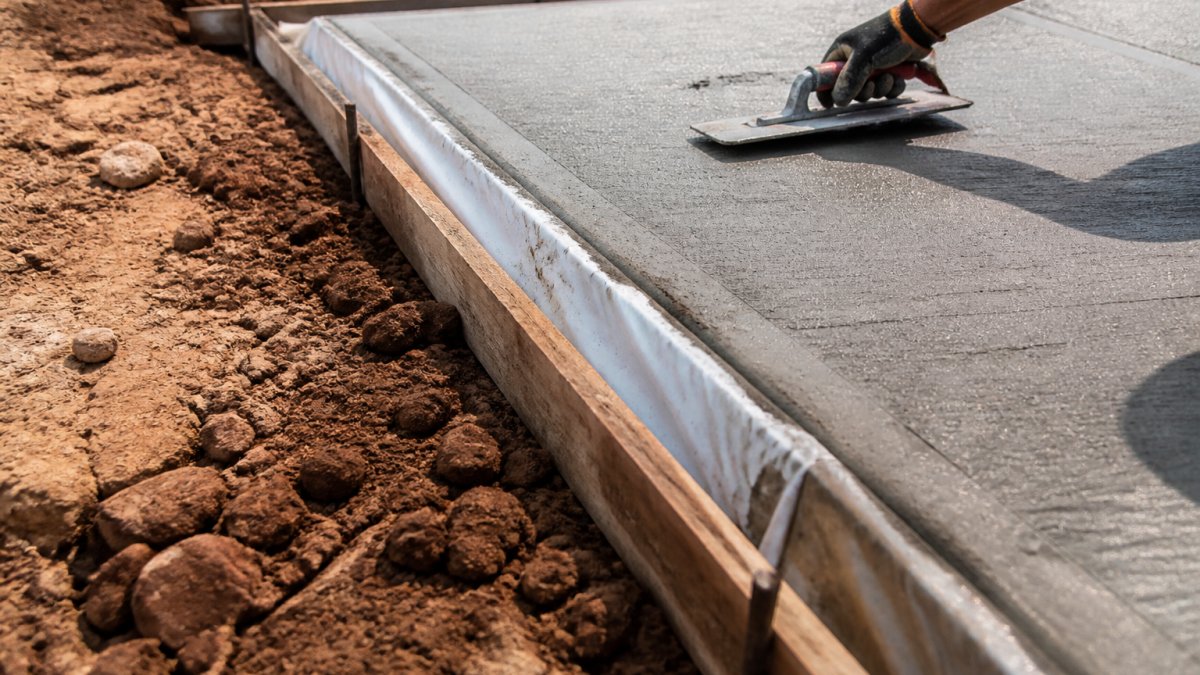
The base layer determines everything. If the subgrade isn't properly compacted before concrete pours, settlement happens almost immediately.
Many contractors rush this step, spreading gravel and giving it a light pass.
Proper compaction requires multiple passes with appropriate equipment, compressing the base to at least 95% of its maximum density to prevent settling.
The compaction checklist:
- Remove organic material and debris from the subgrade
- Add 4-6 inches of base material (gravel or crushed stone)
- Compact in 2-inch lifts with a plate compactor or roller
Water Pooling, Drainage Problems, and Washout
Water is concrete's enemy. When it pools on the surface, it seeps through pores to the base layer, weakening the concrete and soil beneath.
Poor grading is the most common cause.
Subsurface washout is worse: runoff along the sides carries away soil, voids develop, and the slab settles unevenly.
Drainage fixes that prevent cracks:
- Slope the driveway 1/8 inch per foot away from structures
- Install or repair edge drains if water pools at the perimeter
- Clear gutters and downspouts so roof runoff doesn't concentrate near the driveway
Temperature Changes and Freeze-Thaw Cycles
Concrete expands when warm and contracts when cold. If it can't move freely, stress builds and cracks form.
Freeze-thaw cycles are brutal: water enters small cracks, freezes, expands, and widens them. After several winters, hairline cracks become structural damage.
This region's temperature swings accelerate the process.
Climate-specific prevention:
- Ensure proper slope and drainage to minimize water entry
- Use a concrete sealer rated for freeze-thaw protection
- Avoid deicing salts, which increase water penetration
Concrete Shrinkage and Curing Issues
Concrete shrinks as it cures, which is normal. But if it dries too fast or unevenly, shrinkage stress concentrates and causes cracking.
Rapid drying happens in hot, dry, or windy conditions: the surface dries while the interior cures, creating uneven stress as the surface contracts faster.
Improper curing compounds the problem.
Proper curing requires:
- Keeping the concrete moist (spray with water or cover with plastic sheeting)
- Protecting it from direct sun during the first week
- Avoiding traffic or heavy loads for at least 7 days
Improper Installation and Finishing
A high water-cement ratio makes concrete weaker. Some contractors add extra water for workability, reducing strength and increasing shrinkage cracking, it looks fine initially but fails faster.
Finishing technique matters too. Excessive troweling brings water and fine particles to the top, creating a weak layer prone to cracking and spalling.
Installation best practices:
- Use a water-cement ratio of 0.45 or lower for driveways
- Add reinforcing mesh or rebar to distribute stress
- Finish with a broom to create texture and durability
How to Identify Crack Type and Assess Severity
Not all cracks are equal. Some are cosmetic and stable; others signal structural failure. Identifying crack type helps you decide whether to repair now or monitor.
Hairline Cracks vs. Structural Damage
Hairline cracks are thin, usually less than 1/16 inch wide, caused by normal shrinkage during curing.
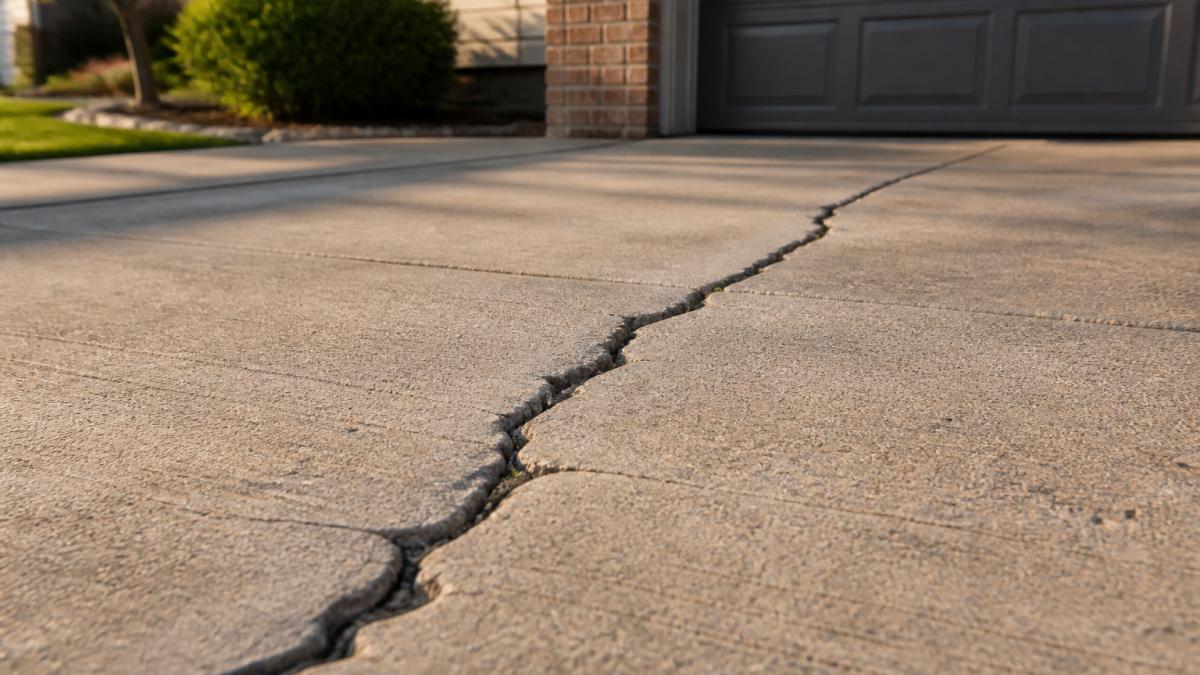
Structural cracks are wider, often 1/4 inch or more, and may come with heaving, settling, or spalling. They indicate the concrete or its base is failing and require repair.
How to tell the difference:
- Hairline cracks are uniform in width and don't widen seasonally
- Structural cracks are wider, jagged, or follow a pattern
- Structural cracks may have vertical displacement (one side higher than the other)
Measuring Crack Width and Depth
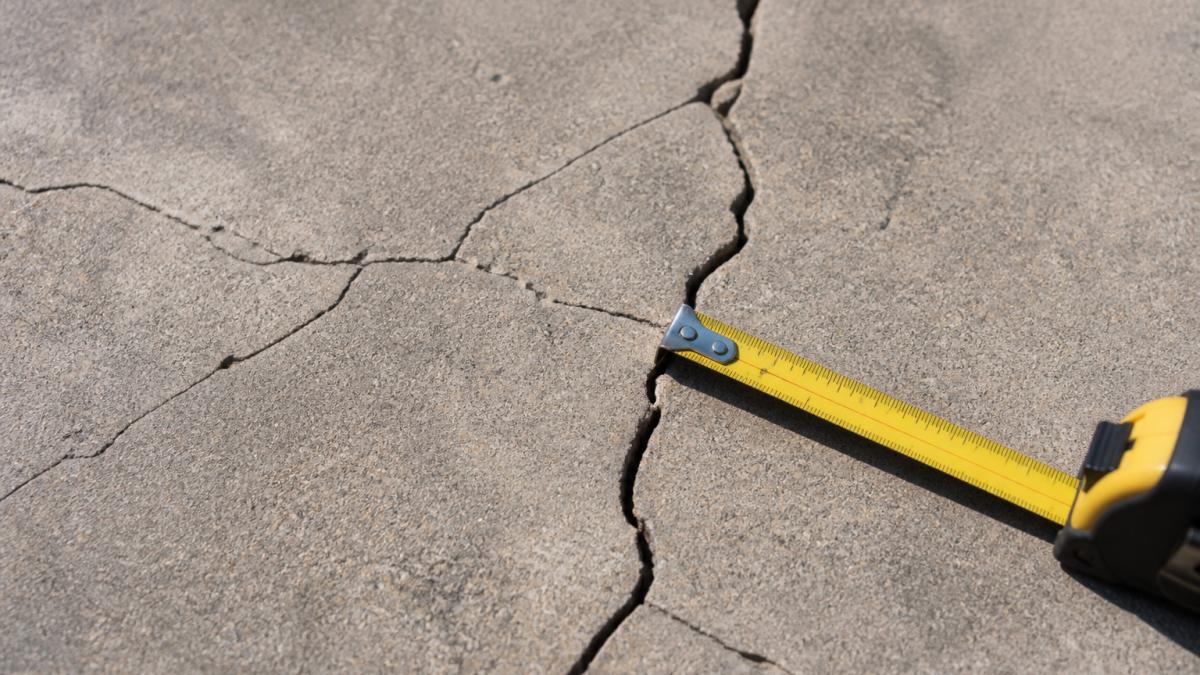
Use a ruler or measuring tape to gauge crack width: hairline under 1/16 inch, small 1/16 to 1/8 inch, medium 1/8 to 1/4 inch, wide over 1/4 inch.
Depth is harder to assess without professional equipment, but you can estimate by looking at the crack's sides.
Document the measurement with photos and recheck in a few months. If it's growing, that signals active movement and a reason to repair sooner.
When Cracking Is Normal vs. a Warning Sign
Some cracking is inevitable. Even properly installed, maintained concrete develops minor cracks over time.
Warning signs that cracking requires attention:
- Cracks that grow visibly over weeks or months
- Cracks wider than 1/4 inch
- Cracks accompanied by heaving or settling
If you see any of these, contact a professional for evaluation.
Common Causes of Concrete Driveway Cracks in Your Region
Regional factors amplify cracking risk. Understanding local soil and climate conditions helps you prevent problems specific to this area.
Expansive Clay and Soil Heave
Expansive clay is common in this region. It swells when wet and shrinks when dry, and this movement is powerful enough to crack concrete.
Soil heave occurs when clay expands beneath the driveway, pushing the slab upward. Uneven heave creates stress, and cracks form, often radiating from the center of the slab.
Prevention for expansive clay:
- Ensure excellent drainage so the clay doesn't stay saturated
- Install a moisture barrier beneath the concrete
- Use a thicker slab (5-6 inches instead of 4 inches) to resist heaving
Tree Roots and Vegetation Pressure
Tree roots grow toward moisture and can lift concrete slabs. As roots expand, they create stress points. Cracks follow the path of the roots.
Vegetation near the driveway also absorbs soil moisture, causing the soil to shrink. This creates voids beneath the slab. The concrete settles into those voids and cracks.
Root and vegetation management:
- Plant trees at least 10 feet away from the driveway
- Remove existing trees that are lifting the slab
- Keep vegetation trimmed back from the edges
How to Prevent Concrete Driveway Cracks Before They Start
Prevention is far cheaper than repair. The right steps before pouring save thousands in future repairs.
Proper Base Preparation and Compaction
Start with the foundation. Remove all organic material from the subgrade. Compact the soil to 95% maximum density. Add 4-6 inches of compacted base material.
This step separates driveways that last 30 years from those that crack within 5. Don't cut corners here.
Base preparation steps:
- Clear the site of topsoil, roots, and debris
- Grade the subgrade for proper drainage (slope away from structures)
- Compact in 2-inch lifts
Control Joints and Expansion Joints
Control joints are intentional weak points. They guide cracking into predetermined locations where it's less visible and easier to repair.
Control joints should be spaced every 4-6 feet in both directions.
Expansion joints are placed where the concrete meets other structures (house, garage, street).
Joint placement:
- Space control joints every 4-6 feet in a grid pattern
- Cut joints 1/4 inch wide and 1 inch deep
- Install expansion joints where concrete meets other structures
Drainage and Grading Best Practices
Slope the driveway 1/8 inch per foot away from the house. This simple step prevents water pooling. Water that runs off doesn't seep into the concrete or erode the base.
Install edge drains if the site naturally collects water. Clear gutters and downspouts so roof runoff doesn't concentrate near the driveway.
Grading checklist:
- Slope away from all structures at 1/8 inch per foot minimum
- Install edge drains in low-lying areas
- Ensure gutters direct water away from the driveway
Concrete Mix and Reinforcement Specifications
Use a concrete mix designed for your climate. The water-cement ratio should be 0.45 or lower. Lower ratios produce stronger, more durable concrete.
Add reinforcement. Wire mesh or rebar distributes stress and reduces cracking. For driveways, 6x6 wire mesh or #4 rebar spaced 18 inches apart is standard.
Mix specifications:
- Water-cement ratio of 0.45 or lower
- Air entrainment for freeze-thaw resistance (4-6% air)
- Wire mesh or rebar for reinforcement
Concrete Driveway Crack Repair: When and How
Not all cracks need immediate repair. But waiting too long allows water to penetrate and damage the base. The timing of repair matters.
Repair Methods by Crack Type
Hairline cracks under 1/16 inch can be sealed with a concrete sealer.
Small cracks (1/16 to 1/8 inch) should be cleaned, filled with concrete caulk, and sealed.
Medium cracks (1/8 to 1/4 inch) require concrete patching compound.
Wide cracks (over 1/4 inch) may need injection repair or professional patching.
Repair timeline:
- Hairline cracks: seal within 1 year
- Small cracks: repair within 6 months
- Medium cracks: repair within 3 months
- Wide cracks: repair immediately or monitor closely
When to Repair Now vs. Monitor
Repair immediately if:
- The crack is wider than 1/4 inch
- Water is leaking through or pooling on the surface
- The crack is widening visibly (measure monthly)
- The slab is heaving or settling unevenly
Monitor and repair later if:
- The crack is hairline and stable
- No water is entering
- The crack hasn't widened in 6 months
- The driveway is otherwise sound
Construction Services can evaluate your specific situation and recommend the best timing and method for repair.
Concrete Driveway Lifespan and Long-Term Maintenance
A well-built driveway lasts 25-40 years. But maintenance extends that lifespan and prevents costly repairs.
Expected Lifespan and Factors That Extend It
Concrete driveway lifespan depends on installation quality, climate, and maintenance. A properly installed driveway in this region should last 25-30 years. With excellent maintenance, it can reach 40 years.
Factors that extend lifespan:
- Proper base preparation and compaction
- Quality concrete mix with low water-cement ratio
- Excellent drainage and grading
- Regular sealing and maintenance
Factors that shorten lifespan:
- Poor base preparation
- High water-cement ratio concrete
- Inadequate drainage
- Deicing salts and harsh chemicals
Routine Maintenance to Prevent Crack Progression
Seal your driveway every 2-3 years. Sealer prevents water penetration and protects the concrete surface.
Clean the driveway regularly. Remove debris, dirt, and organic growth.
Repair cracks promptly. Small cracks are cheap to fix. Large cracks are expensive. Don't wait.
Annual maintenance checklist:
- Inspect for new cracks or crack growth
- Clean and pressure wash (low pressure)
- Seal the surface every 2-3 years
- Fill any cracks or holes
Concrete driveway cracks develop from predictable causes: soil movement, water damage, temperature stress, and installation mistakes.
Frequently Asked Questions
What causes concrete driveway cracks in areas with clay soil?
Clay soil is expansive, it swells when wet and shrinks when dry. This constant movement creates uneven pressure beneath the concrete slab, causing it to settle unevenly and crack. Poor drainage that allows water to pool around the driveway makes this worse. Proper base preparation, grading, and drainage are essential to minimize this risk in clay-heavy regions.
How long should a concrete driveway last before cracking?
A well-installed concrete driveway can last 25 to 30 years or longer. Some minor hairline cracks may appear within the first few years as the concrete shrinks during curing, this is normal. Significant cracking before 4 to 5 years often signals installation issues, poor base preparation, or drainage problems. Regular maintenance and prompt repair of small cracks extend the lifespan considerably.
Can poor drainage cause a concrete driveway to crack?
Yes. Water pooling around the driveway saturates the base material and soil beneath it, causing settlement, erosion, and uneven pressure. In freeze-thaw cycles, trapped water expands as it freezes, heaving the concrete and creating cracks. Proper grading, gutters, and drainage channels direct runoff away from the slab. This is one of the most preventable causes of cracking.
When should a concrete driveway crack be repaired?
Hairline cracks (less than 1/8 inch wide) can be sealed preventatively to stop water infiltration. Cracks wider than 1/4 inch or those that are actively widening should be repaired promptly. Horizontal cracks or cracks with heaving concrete require professional assessment, as they may signal structural issues. Early repair prevents water from reaching the base and soil, stopping progression.