 how-to
How to Hire Subcontractors for Structural Work
Quick Summary
To hire structural subcontractors, verify each candidate's license, insurance and bonding before work starts, then confirm they have built similar structural systems. Use a stricter process than you would for finish work, with written scope, schedule and payment terms and performance tracking throughout the project.
- Confirm license, insurance and bonding before any structural work starts
- Check recent structural projects, not just general construction experience
- Call references and ask specifically about structural performance
- Put scope, schedule and payment terms in a written subcontract
- Track performance against the contract as work moves forward
Table of Contents
- Why Hiring Structural Subcontractors Requires a Stricter Process
- How to Find Subcontractors as a General Contractor
- Structural Subcontractor Qualifications to Verify
- Subcontractor Prequalification Checklist
- Evaluating Structural Bids and Comparing Costs
- Writing a Subcontractor Agreement Template for Structural Work
- Scheduling, Communication, and Legal Considerations on Site
- Booking a Structural Consultation with Your Project Team
- Frequently Asked Questions
Why Hiring Structural Subcontractors Requires a Stricter Process
Structural work carries more risk than most trades. A bad footing, a weak connection or a missed code requirement can affect the whole building. That is why hiring structural subcontractors needs a stricter process than hiring for finish work.
The construction industry is short on workers. Associated Builders and Contractors (ABC) estimates the industry needs ABC estimate of 349,000 net new construction workers in 2026 to meet demand. When crews are scarce, it is tempting to hire the first available team. Slow down and check them anyway.
Here is what a stricter process looks like:
- Confirm the subcontractor's license, insurance and bonding before any work starts
- Check past structural projects, not just general experience
- Put scope, schedule and payment terms in writing
- Track performance against the contract as work moves forward
Some of the most useful research on this comes from academic and industry studies. A performance-based subcontractor selection model published through the American Society of Civil Engineers describes measuring candidates against key performance indicators rather than a general impression. Using measurable criteria makes it easier to compare bids and to hold a subcontractor to what they promised.
How to Find Subcontractors as a General Contractor
Start with trades you already know. Ask other general contractors, engineers and material suppliers who they trust. A referral from someone who has worked with a crew on a similar structure is worth more than a flashy online profile.
Next, widen the search:
- Ask local suppliers who buys steel, concrete and lumber in volume
- Check trade associations and licensing records in your area
- Review job boards and bid platforms for crews that show structural experience
- Visit active job sites and note which crews keep their work clean and on schedule
Do not hire from a list alone. Call each candidate, ask for recent project references, and request the names of the people who will run the crew on site.
Construction Services handles both residential and commercial projects, so general contractors can find a metal building contractor to talk through foundation and structural details. Those early conversations help you see how a crew plans its work before you commit to a subcontract.
Structural Subcontractor Qualifications to Verify
Structural qualifications go beyond a trade license. A crew that has framed houses for years may have never erected a multi-story steel frame or placed structural concrete under an engineered design. For more on vetting specialty metal building contractors, see specialty metal building contractor guidance.
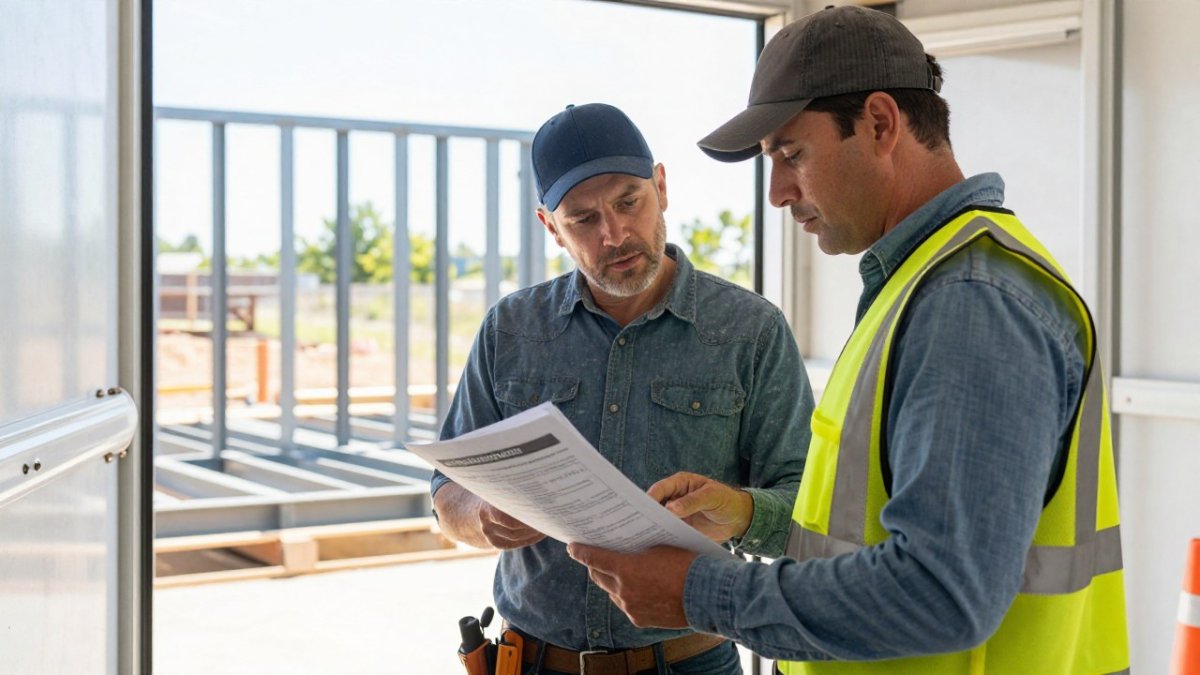
Start by matching the scope to the trade. Structural work usually falls into a few buckets, and each has its own evidence trail:
- Steel erection: Ask for projects with the same connection types (bolted, welded, moment frames), the same tonnage range, and the same erection sequence. Ask who performed the bolting and welding and whether those workers hold current certification through the American Welding Society (AWS) or an equivalent program. Request the welding procedure specifications (WPS) and procedure qualification records (PQR) the crew works from.
- Structural concrete: Ask for projects with the same foundation type (spread footings, mat, drilled piers, post-tensioned slabs) and the same exposure conditions. Ask how the crew handles formwork design, rebar placement, embed placement, and concrete curing in hot or cold weather. Request recent cylinder break results and the name of the testing lab they worked with.
- Framing (wood and light-gauge steel): Ask for projects with the same span and load conditions, the same shear and hold-down details, and the same inspection history. Ask how the crew documents nailing patterns, anchor bolt placement, and truss bracing.
For each bucket, verify experience in three ways rather than one:
- Written project list. Ask for at least three recent structural projects of similar size and load type, with the owner or general contractor contact for each. Call those contacts and ask specifically about structural performance, not general satisfaction.
- Foreman and superintendent resumes. The crew that shows up is only as good as the person running it. Ask for the named foreman and superintendent, their years on structural work, and the last two structural projects they supervised. Confirm those names appear on the reference projects.
- Inspection and testing history. Ask for the names of the special inspectors and testing labs used on recent jobs, and whether any structural work failed inspection or required rework. A crew that volunteers this information is usually a crew that tracks it.
Licensing is separate from trade skill. Confirm the license is active, covers the scope of work, and is held by the entity that will sign the subcontract, not just an individual. Check the license through the state or local licensing authority directly rather than relying on a copy the candidate provides.
A small firm can be highly capable, but it still needs to prove capacity. A qualitative study of the capacity and competitiveness of small-sized construction firms shows why owners should look at actual project capacity rather than size alone.
Watch out: A license and a certificate of insurance prove the firm is allowed to work, not that the crew has built your structural system before. Treat trade-specific project evidence as a separate pass/fail gate.
Subcontractor Prequalification Checklist
Use this checklist before you invite any structural crew to bid:
- Active state license for the scope of work
- Current general liability and workers' compensation certificates
- Bonding capacity that fits the contract value
- At least three references from recent structural projects
- Named foreman and superintendent with structural experience
- Written safety program and recent incident history
- Clear list of subcontractors they plan to use
- Current workload, so you know when they can start
Score each item on a simple pass or fail basis. A candidate that fails a license or insurance check should not move forward, no matter how low the bid.
Watch out: Do not accept a verbal promise to get insurance later. Coverage must be in place before the crew steps on site.
Evaluating Structural Bids and Comparing Costs
Structural bids can look very different even when they cover the same work. Build a side-by-side comparison so the scope, not just the total, drives the decision.
| Bid Item | What to Compare | Red Flag |
|---|---|---|
| Scope of work | Matches your drawings and specs | Vague or missing items |
| Materials | Grade, quantity and supplier named | "Materials allowance" with no detail |
| Labor | Crew size and hours | Crew far smaller than the schedule needs |
| Schedule | Start, milestones and finish dates | No dates or unrealistic timeline |
| Insurance and bonding | Included in the price | Cost left out or handled separately |
| Exclusions | Listed clearly | Long list of "not included" items |
Compare the lowest bid carefully. A low number often hides missing scope, thin labor or costs that come back as change orders. Ask every bidder to price the same drawings and the same exclusions.
For a deeper look at how a bid should be built, read our guide on how to get a commercial construction quote. Pricing depends on quantity, dates and delivery, so request a written quote for your specific project.
Writing a Subcontractor Agreement Template for Structural Work
A written subcontract protects both sides. At minimum, include:
Subcontractor Agreement (Structural Work)
- Parties: [General Contractor name] and [Subcontractor name]
- Scope: [Attach drawings, specs and the bid]
- Schedule: Start [date], milestones [list], substantial completion [date]
- Payment: [Schedule of values], retainage [percent], payment timing [days]
- Insurance: Certificates required before mobilization, additional insured status
- Bonding: Performance and payment bond amount [amount] if required
- Safety: Subcontractor follows the project safety plan and applicable codes
- Change orders: Written approval required before extra work starts
- Warranty: [Period] for workmanship on structural elements
- Termination and dispute resolution: [Process and governing state]
Have an attorney review the final version, since contract law varies by state. A template is a starting point, not a substitute for legal advice.
Scheduling, Communication, and Legal Considerations on Site
Structural work is sequence-driven. Foundations must cure and pass inspection before framing starts. Steel must be erected, plumbed, and bolted before the next trade can work above it.
Build the schedule around dependencies, not dates alone:
- Foundations: Confirm curing time and inspection hold points before framing mobilization. Concrete strength testing results should be reviewed before the framer loads the foundation.
- Steel erection: Confirm crane size, pick plan, and lay-down area before the erection date. The crane and rigging plan drives site access, and a crane that cannot reach the pick point will stop the job.
- Framing: Confirm the framing crew can start only after the structural steel or concrete is inspected and signed off, and that the sheathing and bracing sequence matches the engineer's design.
- Above-structural trades: Treat the structural crew's substantial completion as a hard handoff. Roofing, mechanical, and electrical crews should not be scheduled against a structural finish date that has not been confirmed in writing.
Equipment and site access are part of the schedule, not an afterthought. Ask each structural bidder to state the crane, lift, or pump equipment they will bring, the site access they need, and the lay-down area they require.
Coordination with the structural engineer is a recurring task, not a one-time review. For questions to ask contractors before setting these expectations, see questions to ask remodeling contractors.
Inspection hold points deserve their own line in the schedule. Most structural scopes require inspection before concrete placement, before concealment of structural connections, and at framing completion.
Legal issues often come up on site, too. The Internal Revenue Service explains how to classify independent contractors and their tax obligations, so check classification before you rely on a 1099 arrangement.
Watch out: Verbal changes to the scope are the most common source of disputes.
Booking a Structural Consultation with Your Project Team
Hiring the right structural subcontractor is easier when you have a clear plan from the start. Construction Services can help you review scope, schedule and qualifications before you invite bids. We offer free consultations and estimates, and we handle both residential and commercial projects.
To start, book a structural consultation with the Construction Services team. Bring your drawings, your target schedule and a list of the trades you need. We will help you set up the process so the work is safe, well documented and delivered on time.
Frequently Asked Questions
How do you find reliable subcontractors for structural work?
Start with referrals from other general contractors and engineers, then check each candidate's license, insurance certificate, and recent project references. Search local job listings and trade associations, but treat any listing as a lead rather than a qualification. Ask for two or three completed structural projects of similar scope, call those references, and confirm the crew that did the work is the crew you would be hiring. A short site visit to a current job often shows more about crew discipline than any written submittal.
What qualifications should a structural subcontractor have?
A structural subcontractor should hold the license required for the trade in your jurisdiction, carry general liability and workers' compensation coverage, and show experience with the specific structural work in your scope, such as steel erection, rebar placement, or post-tensioned concrete. Ask for proof that foremen have worked on similar projects and that the crew understands inspection requirements for structural elements. Verify that the company can produce its safety program and recent OSHA records on request.
What should a subcontractor agreement include for structural work?
The agreement should define the exact scope of structural work, the drawings and specifications it references, the schedule and milestones, and the payment terms tied to verified progress. Include insurance requirements with additional-insured status, indemnification language, change-order procedures, inspection and correction responsibilities, and a clear dispute process. A written agreement reviewed by an attorney is the safest way to protect both parties.
Who typically pays subcontractors on a construction project?
The general contractor typically pays subcontractors, usually on a schedule tied to pay applications submitted by the contractor and approved by the owner. Many projects also require lien waivers from subcontractors before each payment is released. Confirm your payment schedule and waiver requirements in the subcontractor agreement before work begins.