 how-to
Hiring Custom Metal Building Contractors: A Practical Guide
Table of Contents
- What to Look for in a Custom Metal Building Contractor
- Key Metal Building Contractor Questions to Ask Before Hiring
- Creating a Metal Building Contractor Checklist for Your Project
- Understanding a Metal Building Project Proposal
- Metal Building Construction Timeline: What to Expect
- Verifying Contractor Credentials and References
- Common Mistakes When Hiring Metal Building Contractors
- Frequently Asked Questions
Last Updated: October 21, 2026
What to Look for in a Custom Metal Building Contractor
Hiring the right metal building contractor can mean the difference between a smooth project and a financial and logistical nightmare. The best combine proven experience, proper credentials, and a clear understanding of your needs.
When evaluating metal building contractors, focus on three areas: track record with similar projects, licensing and insurance, and clear communication about scope and timeline. A contractor who can't answer directly or rushes the consultation is a warning sign.
Experience and Track Record
The most important question is simple: Has this contractor completed projects like yours? Metal building construction demands specific technical knowledge, site preparation, foundation requirements, weather sealing, and interior finishing, that generalizes poorly from other construction types.
Look for contractors who can show completed projects in your area.
Ask directly: How many metal building projects have they completed in the last three years? Can they provide references from at least three similar projects?
Licensing, Insurance, and Bonding
This is non-negotiable.
Insurance is equally critical. Ask for proof of general liability insurance and workers' compensation, plus a certificate naming you as an additional insured.
Bonding is the third layer. A performance bond guarantees the contractor will complete the work as specified. A payment bond ensures subcontractors and material suppliers are paid.
Key Metal Building Contractor Questions to Ask Before Hiring
Before signing any contract, get answers to specific questions about how the contractor will approach your project. These separate experienced contractors from those cutting corners.
Design and Engineering Capability
Ask: Do you handle design and engineering in-house or work with third-party engineers? Design errors are expensive to fix. Metal building contractors should understand load calculations, local wind and snow load requirements, and how to optimize layout for your intended use.
Request examples of designs they've created or modified, and ask about their site analysis process: do they visit the property and assess soil, drainage, existing structures, and utilities?
Clarify who is responsible for engineering stamps and compliance documentation. Structural designs must be stamped by a licensed engineer. Confirm that the contractor either employs a licensed engineer or has a relationship with one who will handle this requirement.
Timeline and Project Management
Ask for a realistic timeline broken into phases: site preparation, foundation, erection, roof installation, exterior finishing, and interior work.
How does the contractor track progress and communicate, weekly updates, a project portal, regular site meetings? Unclear communication is often why projects feel like they're stalling, so establish expectations upfront.
Ask about their contingency plan if weather delays work or if supply chain issues arise. Metal building materials occasionally face delays.
Creating a Metal Building Contractor Checklist for Your Project
Before you hire anyone, create a written checklist of your project requirements to compare bids and hold contractors accountable.
Scope of Work and Site Assessment
Your checklist should include building dimensions, intended use (storage, workshop, garage, agricultural), and specific features you need (office space, bathroom, loading dock, ventilation).
Site details matter. Note soil type, slope, drainage, and proximity to utilities, plus existing structures, obstacles, and access for equipment and deliveries.
List any special requirements: Does the building need to match existing structures aesthetically? Are there historical or architectural restrictions? Will you need temporary structures during construction?
Permits and Code Compliance
Your checklist should confirm who obtains permits. Usually the contractor does, but verify upfront. Ask which permits are required, building, electrical, plumbing, mechanical, since some jurisdictions require separate permits per trade.
Clarify the inspection process. Most jurisdictions require inspections at foundation completion, framing completion, and final completion. Who schedules inspections? Who addresses any code violations the inspector identifies? Building code compliance is not optional, it affects safety, resale value, and insurance coverage.
Understanding a Metal Building Project Proposal
A professional proposal is detailed and specific, protecting both you and the contractor. A vague proposal often becomes the source of disputes and hidden costs.
What the Proposal Should Include
A complete proposal specifies exactly what the contractor will provide and what you are responsible for. It should include:
- Building specifications: dimensions, materials, color, roof style, door and window locations
- Site work: grading, drainage, foundation type and specifications, utility connections
- Labor and materials: what's included and what's not (e.g., is interior finishing included or separate?)
- Timeline: start date, major milestones, estimated completion date
- Price: total contract price, payment schedule, and what triggers each payment
- Change order process: how additional work will be priced and approved
- Warranty: what the contractor guarantees and for how long
A detailed proposal prevents misunderstandings. If the contractor says the price includes "interior finishing," it should specify exactly what that means: flooring type, wall finish, lighting, HVAC, or something else.
Comparing Bids and Avoiding Hidden Costs
Comparing bids directly is difficult because contractors define scope differently, one bid might include site grading and concrete foundation, another lists them separately.
A bid significantly lower than others often means the contractor excluded something, misunderstood the scope, or plans to cut corners. Ask specifically: What is included? What costs extra?
Understand the payment schedule. Most contractors require a deposit to secure materials and schedule work, with the remainder paid in stages as work is completed.
| Bid Comparison Factor | What to Verify | Red Flag |
|---|---|---|
| Total Price | Is it clearly defined and all-inclusive? | Vague pricing or "to be determined" line items |
| Scope Details | Are all building components and finishes specified? | Proposal lacks detail or says "per plans" without providing plans |
| Payment Schedule | Are payments tied to project milestones? | Contractor demands full payment upfront or in one lump sum |
| Timeline | Is there a realistic start and completion date? | No timeline provided or unrealistically fast schedule |
| Change Order Process | How will additional work be priced? | No process defined; contractor says "we'll figure it out later" |
Metal Building Construction Timeline: What to Expect
Understanding the typical project timeline helps you plan around the disruption and identify if the contractor is falling behind schedule.
Pre-Construction and Planning Phase
This phase typically takes 4-8 weeks and includes design finalization, permitting, material ordering, and site preparation planning. The contractor submits permit applications and orders long-lead materials like metal panels and structural components, which can have 6-12 week lead times.
Site preparation, grading, drainage, and utility locating, happens during this phase. If the foundation needs special preparation (poor soil, high water table), it may take longer. The contractor should keep you informed about permit status and material delivery dates.
Build Duration and Completion Milestones
The actual construction typically takes 8-16 weeks depending on building size and complexity. The contractor should provide a detailed schedule with specific milestones:
- Foundation completion and inspection
- Structural frame erection (typically 2-4 weeks for most buildings)
- Roof installation
- Exterior wall panels and trim
- Door and window installation
- Interior finishing (if included)
- Final inspection and punch-list completion
Weather significantly affects timeline: rain delays foundation work, wind delays roof installation, and snow shuts down exterior work in many regions. A realistic contractor builds in weather contingency and communicates delays promptly.
Verifying Contractor Credentials and References
Before you sign a contract, verify that the contractor is who they claim to be and that their track record matches their claims.
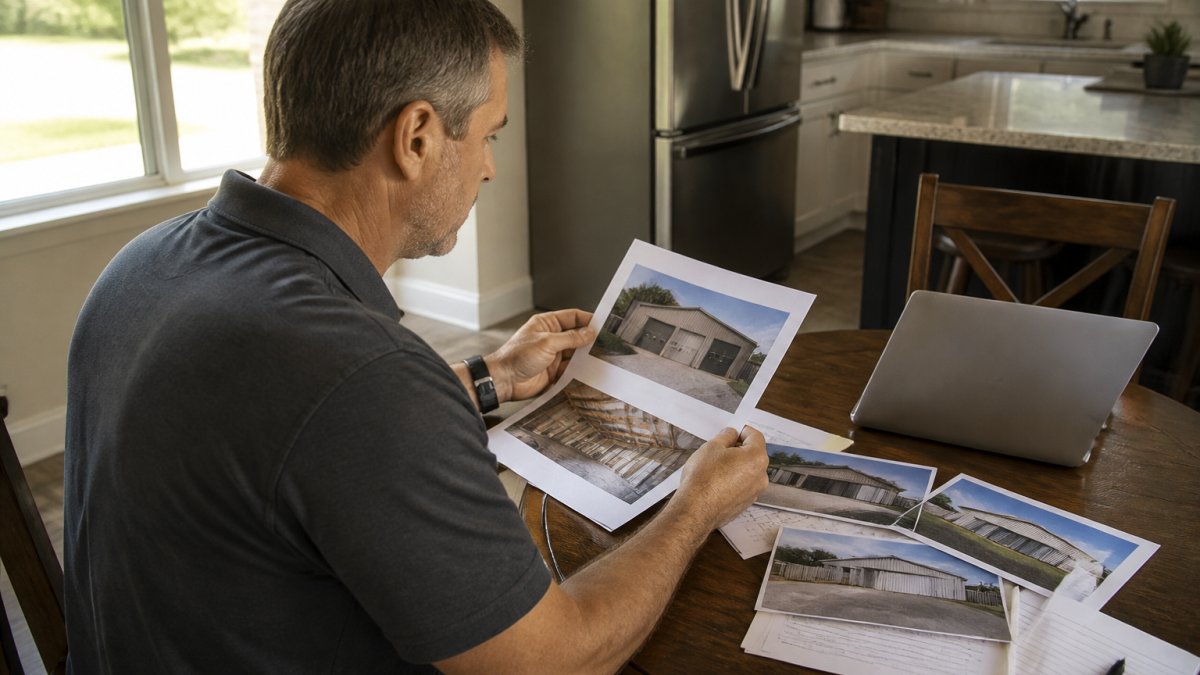
Checking References and Past Projects
Request at least three references from projects completed in the last two years. Ask each: Did the project stay on budget? Was the timeline accurate? How did the contractor handle problems?
If possible, visit completed projects in person. Check workmanship: Are seams sealed properly? Is the structure plumb and square? Are interior finishes clean?
Ask the contractor for permission to contact their suppliers and subcontractors. Suppliers can tell you if the contractor pays promptly and handles disputes professionally.
Evaluating Customer Reviews and Ratings
Check online reviews on Google, Better Business Bureau, and industry-specific review sites. Look for patterns in feedback: Are customers consistently happy with timeline and budget? Do reviews mention communication problems?
Be cautious about reviews that seem fake (overly enthusiastic, generic language, or all posted within a short time period).
A contractor with mostly positive reviews and a clear response to any negative feedback is more trustworthy than one with no reviews or one who ignores criticism.
Common Mistakes When Hiring Metal Building Contractors
Learning from others' mistakes can save you thousands of dollars and months of frustration.
Choosing Based on Price Alone
The lowest bid is almost never the best choice. Contractors who underbid typically recover costs by cutting corners, using lower-quality materials, or adding expensive change orders later. A bid that's significantly lower than others should trigger questions: What are they excluding? How are they reducing costs?
Compare bids based on total value: quality, timeline reliability, warranty, and communication. A contractor who delivers on time, stands behind their work, and communicates clearly is worth the premium.
Skipping the Site Visit and Assessment
Some contractors provide quotes without visiting the property. This is a major red flag. Site conditions, soil type, drainage, existing structures, utility locations, directly affect cost and timeline. A contractor who hasn't visited the site is guessing.
Require the contractor to visit the property, assess conditions, and discuss findings with you. A thorough site assessment prevents surprises during construction.
Failing to Verify Insurance and Licensing
This mistake exposes you to serious liability. If an uninsured contractor is injured on your property, you could be held responsible for medical costs and lost wages. If an unlicensed contractor causes property damage, you have no regulatory recourse.
Before signing any contract, verify licensing through your state's contractor licensing board and request proof of insurance. This protects you from catastrophic liability.
Frequently Asked Questions
What questions should I ask a metal building contractor before hiring?
Ask about their experience with projects similar to yours, their design and engineering capabilities, timeline estimates, how they handle permits and inspections, warranty coverage, and what happens if change orders arise during construction. Request references from recent projects and ask how they manage communication and project updates. Understanding their process for site visits and foundation assessment is critical, especially in areas with challenging soil conditions.
How do I compare quotes from metal building contractors?
Request detailed proposals from multiple contractors that break down materials, labor, site preparation, interior finishes, and any extras separately. Ensure all proposals address the same scope of work and include the same site conditions assessment. Watch for incomplete quotes that omit site prep or finishing costs, these often appear cheaper initially but cost more later. Compare warranty terms, payment schedules, and timeline alongside pricing.
What should a metal building contractor's proposal include?
A complete proposal should specify building dimensions and layout, materials and gauge specifications, site preparation requirements, foundation details, interior finishes if applicable, all labor costs, timeline with key milestones, warranty coverage, payment schedule, permit and inspection responsibility, and change-order procedures. It should reference site visit findings and address local building code requirements. Any exclusions or assumptions should be stated clearly to avoid disputes.
How long does it take to build a custom metal building?
Timeline varies by project size, complexity, and site conditions. A typical metal building project takes 2-4 months from permit approval through completion, though this can extend with custom layouts, interior finishes, or site challenges. The planning and design phase adds 2-6 weeks before construction begins. Weather, permit processing delays, and foundation work can extend the schedule. Your contractor should provide a detailed timeline with specific milestones and explain what factors might cause delays.
Hiring the right metal building contractor starts with knowing what questions to ask and what credentials to verify. Construction Services helps property owners navigate this process by providing free consultations and detailed project assessments. We handle the site evaluation, design planning, and transparent bidding process so you understand exactly what you're getting before work begins. Get a quote today and see how professional planning prevents costly mistakes.