 how-to
How to Repair a Residential Concrete Foundation
Last Updated: October 30, 2026
Quick Summary
The most useful foundation repair tips start with inspection: photograph each crack with a scale reference, measure its width, and mark its ends with a dated pencil line. A crack that stays stable and dry can sometimes be sealed, but one that keeps widening, has offset edges, or comes with sticking doors needs a professional assessment.
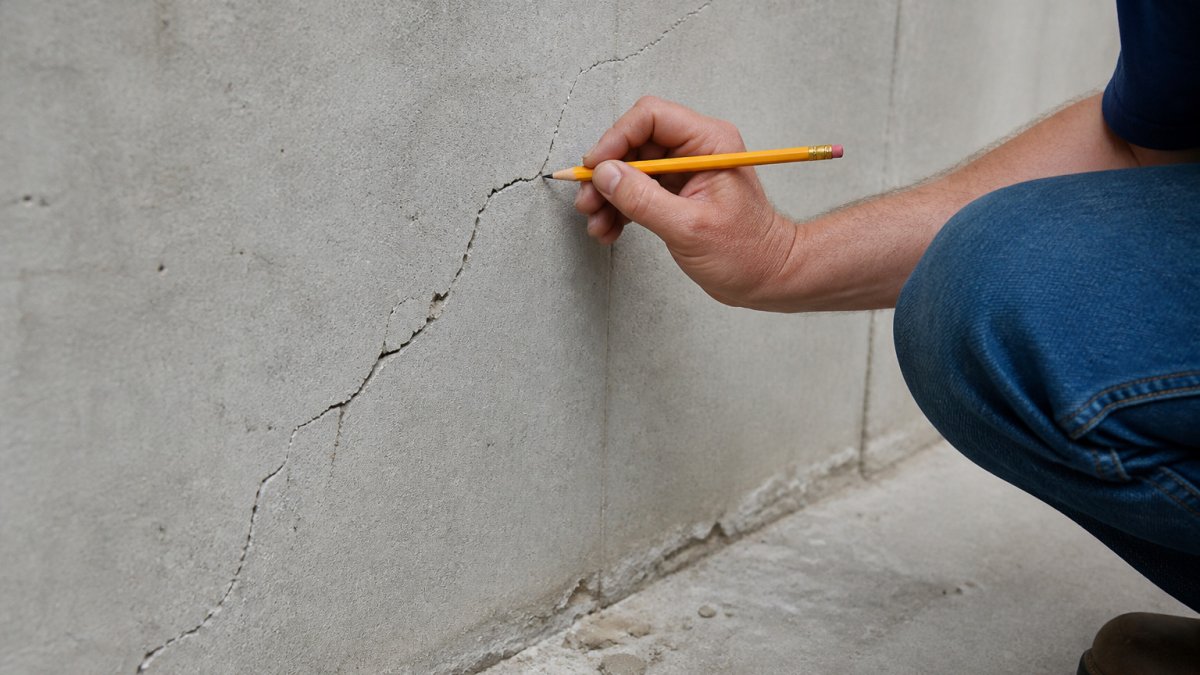
- Mark the ends of each crack with a dated pencil line to see if it is still moving.
- Cracks wider than a quarter inch, or ones you can fit a fingertip into, call for a professional.
- Sealing a crack that is still moving will tear loose and cost you twice.
- Never lift or level a slab yourself, and do not excavate against the foundation wall.
- Clean gutters at least twice a year and extend downspouts several feet from the foundation.
Table of Contents
- Signs of Foundation Problems in a House to Check First
- Step 1: Inspect and Document the Foundation Before You Repair
- Step 2: Decide Between DIY Crack Sealing and a Professional Repair
- Step 3: Repair a Concrete Foundation Crack Correctly
- Step 4: Protect the Slab with Foundation Drainage Tips
- Common Foundation Repair Methods and What They Cost
- Booking Your Foundation Inspection with Construction Services
- Frequently Asked Questions
Signs of Foundation Problems in a House to Check First
Foundation trouble often shows up as a small crack long before it becomes expensive. Most homeowners in Gun Barrel City and the surrounding area notice the first sign by accident, while sweeping a patio or walking past an exterior wall, and many start looking for foundation repair tips right then.
Concrete is strong under compression, but it does crack. Our guide on why concrete driveways crack explains the causes and what counts as normal wear. Gitnux foundation repair industry statistics reports that 72% of homes have concrete slab foundations that are prone to cracking.
Visible Symptoms Inside and Outside the Home
Look at both the inside and outside of the house. Common signs include:
- Cracks in exterior brick, stucco, or the foundation wall
- Doors or windows that stick, or no longer close square
- Gaps between walls and ceilings or floors
Each symptom points to a different possible cause, so note where you see it. Take photos and dates. This record will help any inspector you call later.
Crack Width and Movement: A Simple Triage Guide
Width and movement tell you more than the crack's length. Our guide on preventing concrete cracks on clay soil shows how soil movement drives cracking. Use this rough guide:
- Hairline cracks: Thin, cosmetic, and often stable. Monitor them.
- Cracks that widen over time: Signs of ongoing movement. Schedule an inspection.
- Cracks with offset edges: One side sits higher than the other. This suggests settlement.
Mark the ends of a crack with a pencil and date it, since this is one of the most useful foundation repair tips you can follow. If the line moves past the mark within a few months, the foundation is still shifting.
Step 1: Inspect and Document the Foundation Before You Repair
Before you fix anything, document the foundation in detail. Our how to prepare soil for concrete guide walks through the soil conditions beneath the slab.
Walk the full perimeter of the house in daylight. Then check the interior, especially corners and rooms near exterior walls.
- Photograph each crack with a ruler or coin beside it for scale
- Measure crack width at its widest point
- Note whether cracks are vertical, horizontal, or diagonal
Soil matters here. Gitnux foundation repair industry statistics reports that 52% of foundation failures are driven by soil movement.
Step 2: Decide Between DIY Crack Sealing and a Professional Repair
Some repairs are reasonable for a homeowner. Others need a trained crew. The line depends less on how the crack looks and more on what is moving and why. If the slab, wall, or frame is shifting, sealing the surface hides the symptom and lets the cause keep working.
A DIY approach may suit:
- A single hairline crack that has not changed in several months
- A cosmetic crack in a non-structural surface, such as a patio slab or a garage floor that is not tied to the house
- A crack with no offset, no sticking doors, and no sloping floors
Call a professional when you see:
- Cracks that keep widening or reopen after sealing
- Offset edges or a visibly uneven wall or floor
- Doors and windows that bind, or gaps forming at ceilings
Safety Limits of DIY Foundation Work
Concrete repair looks simple on video and is unforgiving in practice. Keep these limits in mind before you pick up a caulk gun:
- Never lift or level a slab yourself. Jacking a slab without engineered support can crack plumbing lines, break masonry, and shift load onto walls that were not designed for it.
- Do not excavate against the foundation wall. Digging out soil to inspect or patch a wall removes the lateral support the wall depends on and can accelerate failure.
- Stop if you find active water. A wet, seeping crack means water is entering the assembly. Sealing over it traps moisture and can lead to freeze damage, mold, or efflorescence.
A Simple Decision Rule
Ask three questions in order. Is the crack stable? Is the surface structural? Is water actively involved? If the answer to all three is yes, stable, non-structural, and dry, a DIY seal is reasonable.
The table below sums up when a homeowner can reasonably handle a crack and when a trained crew should take over.
| Situation | Appropriate path | Why |
|---|---|---|
| Single hairline crack, unchanged for months | DIY sealing | Stable and cosmetic |
| Crack that keeps widening or reopens | Professional repair | Cause is still active |
| Offset edges or uneven wall or floor | Professional repair | Suggests settlement |
| Crack wider than a quarter inch | Professional repair | Exceeds DIY limits |
| Doors that bind plus sloping floor | Professional repair | Multiple symptoms together |
| Crack in non-structural patio slab | DIY sealing | No structural role |
Step 3: Repair a Concrete Foundation Crack Correctly
For a stable, non-structural crack, the basic process looks like this:
- Clean the crack with a wire brush and remove loose debris
- Vacuum out the dust so the sealant can bond
- Apply a flexible concrete sealant or silicone filler
- Smooth the surface with a putty knife
- Check the crack again after a few months
A Home Depot guide to concrete crack repair notes that many minor hairline cracks can be handled with simple sealants rather than expensive structural work. That applies only when the crack is stable.
Watch out: Do not fill a crack that is still moving. The filler will tear loose and you will pay for the job twice.
Step 4: Protect the Slab with Foundation Drainage Tips
Water is the most common external driver of foundation trouble, so drainage is your best long-term defense. Foundation Solutions Group guidance on drainage identifies proper gutters and downspouts as a primary way to reduce water-related foundation issues.
Practical steps include:
- Clean gutters at least twice a year
- Extend downspouts several feet away from the foundation
- Grade soil so it slopes away from the house
Consistent moisture levels help keep clay soil from swelling and shrinking under the slab.
Common Foundation Repair Methods and What They Cost
Professional repair methods vary widely, and so does the scope behind a single quote. This section explains what each method does, what drives its cost, and the practical decisions, permits, and insurance questions that surround the work. Pricing depends on the specifics of your home; contact Construction Services for a quote.
Method-by-Method Overview
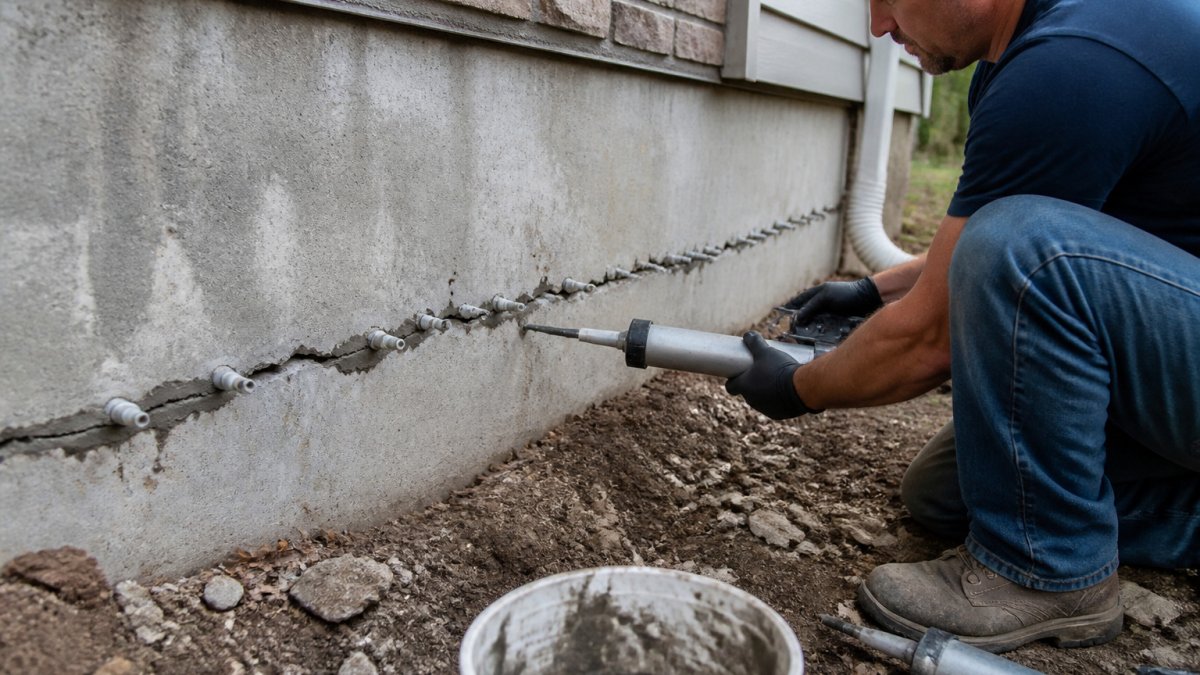
- Crack sealing and epoxy injection: The lowest-cost option, suited to stable hairline cracks and poured-wall leaks. Cost drivers are crack length, access, and whether the crack is dry or seeping.
- Push piers: Steel piers driven to load-bearing strata and used to lift and stabilize settled sections. Cost drivers are pier count, depth to competent soil, and the amount of lift required.
- Helical piers: Screw-in piles used where soil is soft or access is tight. Cost drivers are shaft length, torque requirements, and site access for equipment.
What Actually Drives the Price
Two homes with the same crack can receive very different quotes. The variables that move the number most are:
- Access. A slab edge reachable from a driveway is cheaper to work on than one hemmed in by landscaping, fences, or a finished basement.
- Soil conditions. Clay-heavy soil that swells and shrinks requires deeper piers and more of them than stable sandy soil.
- Extent of movement. A crack that has not moved is a sealing job. A settled corner is a pier job. The difference in scope is large.
- Interior finishes. Lifting a slab can crack tile, bind doors, and disturb cabinetry. Protecting or repairing finishes adds cost.
- Permits and engineering. Some jurisdictions require a engineered repair design or a permit for structural work, which adds review time and cost.
Permits, Codes, and Insurance
Before work begins, ask three questions. Does the jurisdiction require a permit for structural foundation repair? Does the contractor carry general liability and workers' compensation coverage? And will the work be documented in a way your insurer will accept?
- Permits. Requirements vary by jurisdiction. Structural repair, pier installation, and some drainage changes may require a permit and inspection. Ask the contractor who pulls the permit and who pays for the inspection.
- Codes. Repairs should follow the adopted building code for the jurisdiction, including requirements for pier spacing, embedment depth, and load transfer. A written scope should reference the code or engineering standard being followed.
- Insurance. Homeowners insurance policies vary, so review yours to see how gradual settlement and sudden events are treated. Document the cause and keep photos, because the distinction between gradual and sudden damage often decides the claim.
- Disclosure. If you sell the home, prior foundation work and any transferable warranty should be disclosed. Keep the engineering report, permits, and invoices together.
Two Bros Foundation Repair cost and method overview describes these stabilization methods as increasingly common. Use that context to ask better questions, not to anchor a price.
Booking Your Foundation Inspection with Construction Services
If your crack is widening, your doors stick, or you are unsure what you are seeing, schedule a professional inspection.
Before you hire any contractor, NerdWallet's foundation repair cost analysis is a useful starting point for understanding typical project scope.
Contact Construction Services at 235 N Gun Barrel Ln, Gun Barrel City, TX 75156 for your free consultation. We Do That.
Frequently Asked Questions
What are the first signs of foundation problems in a house?
The earliest signs are usually doors and windows that stick or no longer latch, cracks in drywall above door frames, gaps where walls meet ceilings or floors, and sloping or bouncy floors. Outside, look for stair-step cracks in brick, cracks wider than a quarter inch, and gutters or grading that pull away from the house. Concrete slab foundations are prone to cracking, and soil movement drives a large share of failures, so catching these signs early keeps repairs smaller. If several symptoms appear together, schedule an inspection rather than treating each one separately.
Can I repair a concrete foundation crack myself?
Homeowners can often seal narrow, stable, cosmetic cracks with a flexible concrete sealant or silicone filler after cleaning and drying the surface. That approach is not appropriate for cracks that are widening, offset, letting in water through a wall, or linked to sloping floors and sticking doors. Structural repairs such as carbon fiber straps, piers or wall stabilization involve loads and procedures that can cause further damage if done incorrectly. When in doubt, have a qualified contractor assess the crack before you apply any product, because a sealant can hide a problem that continues to grow.
How much does it cost to repair a foundation crack?
Pricing depends on crack size, location, the repair method needed, access and the scope of the project, so there is no single figure that applies to every home. Construction Services provides free consultations and estimates, which give you a written quote for your specific foundation before any work begins. For current pricing, contact Construction Services directly or request a quote through our website.
How often should I check my home's foundation?
Walk the perimeter of the house and check the interior at least twice a year, with extra checks after heavy rain, drought or a freeze. Record each crack's width with a dated photo and a ruler placed beside it, then compare the readings over time. A crack that grows between checks, or new symptoms inside the home, is the signal to call a professional for an inspection.