 listicle
Signs of Bad Concrete Workmanship to Spot Early
Quick Summary
Bad concrete workmanship usually shows up as cracks that widen or spread, a slab that sinks or sits unevenly, surface flaking or spalling, and standing water or buckling. Many of these signs trace back to installation steps like base preparation, thickness, reinforcement, and curing rather than the concrete itself.
- Cracks that are wide, deep, or growing suggest the slab is moving and need a professional look.
- Spider-web cracking usually comes from curing or finishing problems rather than structural failure.
- A slab that sinks at one edge or sits at different heights points to settlement beneath the surface.
- Surface defects that cluster along a pour boundary in the first winter often point to mix or finishing problems.
- Document defects with dated photos and a ruler for scale before any repairs are made.
Table of Contents
- Why Concrete Workmanship Matters More Than Most Homeowners Think
- Cracks That Point to Installation Problems
- Settlement, Sinking and Uneven Slabs
- Surface Problems: Spalling, Scaling, Flaking and Discoloration
- Concrete Damage Types and How to Tell Workmanship From Normal Aging
- Water Problems: Standing Water, Dampness and Buckling
- How to Fix a Bad Concrete Job: Repair Versus Replacement
- Booking a Free Inspection Before the Next Problem Starts
- Frequently Asked Questions
Why Concrete Workmanship Matters More Than Most Homeowners Think
Concrete looks permanent, which is why bad concrete workmanship often goes unnoticed for months. A driveway or foundation can look fine the day it's poured and still hide problems that show up later.
Most concrete failures trace back to the work done before and during the pour, not the concrete itself. Subgrade preparation, slab thickness, reinforcement placement, joint spacing, and curing all affect how the finished surface holds up.
Construction Services builds residential and commercial concrete work, and we treat each of these steps as part of the job. The sections below walk through the warning signs homeowners and property managers most often see, and what they usually point to.
Cracks That Point to Installation Problems
Some cracking in concrete is normal. Shrinkage during curing often leaves thin lines, and control joints are cut in on purpose to guide where cracks form. The concern is cracking that appears in the wrong places, grows over time, or shows up soon after the pour.
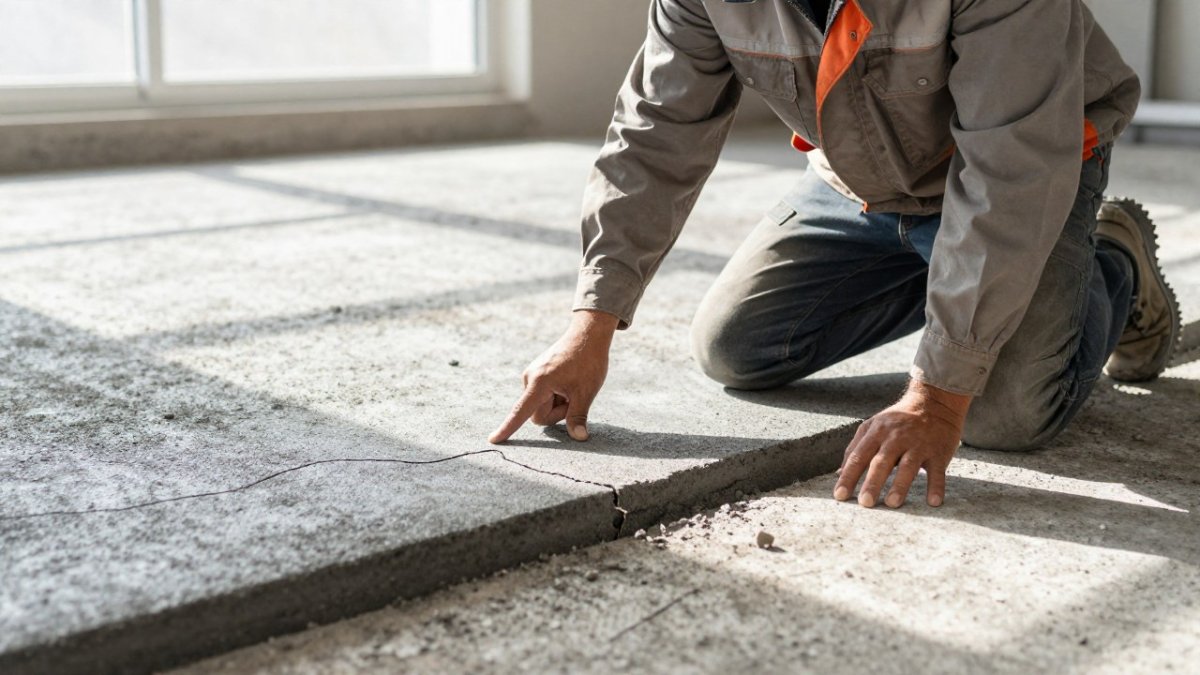
Hairline cracks versus wide, spreading cracks
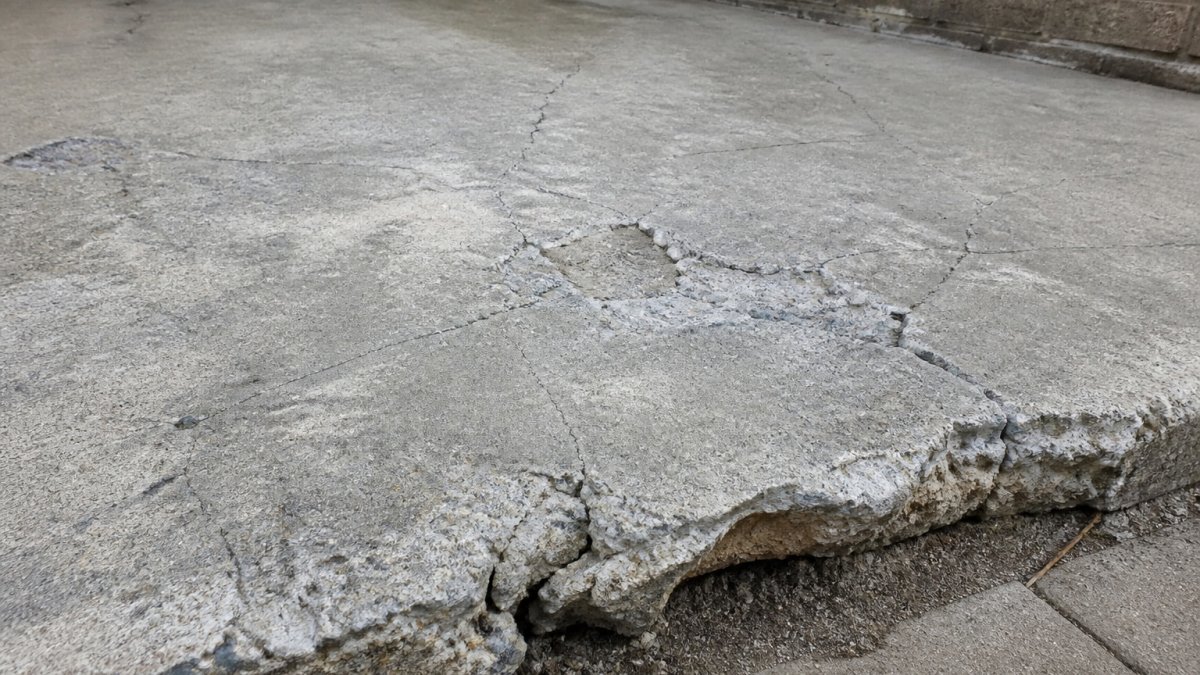
Hairline cracks are very thin and often cosmetic. A crack that is wide, deep, or getting larger is a different matter. Widening cracks suggest the slab is moving, which can point to insufficient base preparation, inadequate reinforcement, or slab thickness that was too thin for the load.
Measure any crack you notice and check it again in a few months. To understand what causes concrete driveways to crack and how to prevent it, see causes and prevention. A crack that grows is worth a professional look.
Spider-web cracking and crack movement
Spider-web cracking, a network of fine cracks across the surface, usually comes from curing problems. Concrete that dries too fast, is finished while too much water is still on the surface, or is overworked during finishing is prone to it. This type of cracking is mostly a surface issue, but it can also signal a mix that was not properly controlled.
Crack movement, where one side of a crack sits higher or lower than the other, is a bigger warning sign. It usually means the slab is settling unevenly.
The table below sums up the crack patterns this section links to installation problems, so you can compare what you see against the likely cause.
| Crack pattern | What it suggests | Next step |
|---|---|---|
| Hairline and stable | Normal shrinkage during curing | Measure and recheck in a few months |
| Wide, deep or growing | Slab is moving; base or thickness problem | Get a professional look |
| Spider-web network | Curing or finishing problems | Treat as surface issue; check mix control |
| One side higher than the other | Slab is settling unevenly | Investigate the cause below the surface |
Settlement, Sinking and Uneven Slabs
Settlement happens when the ground under a slab compacts or shifts. A slab that sinks at one edge, pulls away from a house or garage, or has a noticeable lip where two sections meet is showing this problem.
In many yards, clay soil expands when wet and shrinks when dry. Learn how clay soil affects concrete and how to prevent cracking in clay soil preventing concrete cracks. To check whether the soil under a slab was properly prepared before the pour, read soil preparation for concrete.
Uneven slabs also create trip hazards and can cause doors and garage openings to bind. If you see a slab sitting at different heights, the cause is usually beneath the surface and worth investigating before the damage spreads.
Surface Problems: Spalling, Scaling, Flaking and Discoloration
Surface defects are the easiest to see and the hardest to judge, because the same symptom can come from a bad pour or from years of weather.
- Spalling is the breaking away of chunks or layers from the surface, often exposing coarse aggregate. Workmanship causes include finishing while bleed water was still on the surface, overworking the surface, adding water to the mix on site, and inadequate air entrainment in freeze-thaw climates. Environmental causes include deicing salts and repeated freeze-thaw cycles. A useful distinction: spalling that appears in the first winter and clusters along a pour boundary or a cold joint points to the mix or finishing; spalling that appears after several winters of salt use is more likely exposure.
- Scaling is thin, flat flaking of the top mortar layer. It is commonly linked to premature finishing, too much water in the mix, or curing that was too short or too dry. Light scaling that stops after the first season is often cosmetic; scaling that continues to expose aggregate over successive winters is a durability problem.
- Flaking and crumbling at edges usually point to weak concrete that was not consolidated well during the pour, or to forms stripped too early. Edges are the first place poor consolidation shows because they have the least cover and the most exposure.
- Discoloration and a blotchy finish often trace back to uneven curing, differences between ready-mix batches, or finishing done at different times across the slab. A darker band along a cold joint or a lighter patch where a batch changed is a workmanship signature, not a surface stain.
Measure severity rather than eyeballing it. Photograph the same area with a ruler or coin for scale at each inspection so progression is documented.
Watch out: sealing over a spalling surface without addressing the cause traps moisture and accelerates the next failure; the sealant is not a repair.
Surface problems do not always require replacement. Minor scaling may be treatable with a breathable coating after the cause is corrected, but widespread spalling that exposes reinforcement usually means the surface, and possibly the slab, needs a structural look.
Concrete Damage Types and How to Tell Workmanship From Normal Aging
Not every flaw is a workmanship failure. Concrete ages, and weather, traffic, and chemicals all take a toll. The challenge is separating normal wear from defects that should not have happened.
Workmanship problems tend to appear early and show a pattern. Cracks that start within the first year, sections that sink while the rest of the slab stays level, or a finish that varies sharply from one area to another often point to installation issues.
Environmental damage, such as freeze-thaw cycles or chemical exposure, usually affects surfaces more than structural integrity. Workmanship defects can affect the entire slab. Asking when the problem appeared, how fast it has changed, and whether it follows the pattern of the pour can help narrow down the cause.
Water Problems: Standing Water, Dampness and Buckling
Water is one of the most common causes of concrete failure. Standing water on a slab often means the surface is not sloped correctly or has low spots that trap rain. Over time, that water can soften the base, accelerate cracking, and speed up surface damage.
Dampness or efflorescence, a white powdery residue, can show water moving through the slab. Persistent moisture inside a building floor can also cause flooring and finish problems.
Buckling or heaving, where the slab lifts or pushes up, is usually caused by moisture-related expansion or soil movement beneath the slab. It is a serious sign and should be evaluated quickly, especially if it affects doorways, steps, or foundation areas.
How to Fix a Bad Concrete Job: Repair Versus Replacement
Once you have identified a problem, the next question is whether it can be repaired or whether the section needs to be replaced, and, if workmanship is at fault, how to document the defect before repairs obscure the evidence.
Decide with criteria, not guesswork
Repair is often reasonable when damage is limited to a small area, cracks are stable and not widening, the slab is still level, and the base is sound. Replacement is usually the better option when the slab is sinking or heaving, cracks are widening or spreading, damage covers a large portion of the surface, reinforcement is exposed and rusting, or the base was never properly prepared. Patching a failing slab often delays the problem without solving it. For a practical guide to how residential concrete foundations are repaired, see foundation repair steps.
Get at least two written quotes that separate repair and replacement so you can compare scope, not just totals.
Document before you repair
If you suspect workmanship, preserve evidence first. Photograph each defect with a ruler or coin for scale, note the date and location, and take wide shots that show the pattern across the slab. Keep the contract, change orders, warranty, and all written communications. Request a written inspection report that states the likely cause, not just the symptom. Send concerns in writing and keep copies; a paper trail matters if the issue moves to a warranty claim or a licensing-board complaint.
Pricing depends on the size of the area, the extent of the damage, access, and the repair method. For a current estimate, contact Construction Services for a site visit and written quote.
Booking a Free Inspection Before the Next Problem Starts
If you notice any of these signs, a professional inspection can clarify what is happening and what your options are. At Construction Services, we offer free consultations and estimates, so you can understand the condition of your concrete before making a decision.
Our team is fully insured and handles both residential and commercial concrete projects.
To review the types of concrete work we've completed, you can browse our photo gallery. If you're ready to talk about your project, contact Construction Services at 235 N Gun Barrel Ln, Gun Barrel City, TX 75156, and we will help you decide on the right next step.
Frequently Asked Questions
What are the signs that a concrete job is bad?
Early warning signs include cracks that appear within the first few months, slabs that sit unevenly or pull away from their neighbors, a surface that flakes or dusts under light traffic, blotchy color from inconsistent finishing, and standing water that collects where the slab should drain. Any of these after a recent pour suggests the work may have been rushed, poorly prepared or poorly cured. A licensed contractor can check the subgrade, reinforcement and mix to tell whether the cause is workmanship or normal settling. Documenting each sign with dated photos helps if you need to discuss the problem with the contractor.
Is cracking in new concrete always a sign of poor workmanship?
Not always. Some shrinkage cracking is normal as concrete cures, and control joints are meant to direct it to predictable lines. Cracks become a workmanship concern when they are wide, spreading, offset, or placed away from joints, or when they appear alongside settlement, scaling or water problems. Thin, stable hairline cracks are often cosmetic. Wide or moving cracks should be evaluated, since they can point to inadequate subgrade preparation, insufficient reinforcement or incorrect joint spacing.
What causes spalling or scaling in concrete?
Spalling and scaling are usually caused by moisture and freeze-thaw cycles acting on a surface that was not properly air-entrained, finished or cured. Finishing the surface while bleed water is still present, adding water to the mix on site, or removing forms and curing too early can all leave a weak top layer. Deicing salts can accelerate the damage. If flaking appears within the first season, it generally points to a placement or curing problem rather than age.
When should damaged concrete be repaired or replaced?
Repair is usually practical when the damage is localized, the slab is level and stable, and the cracks are narrow and not moving. Replacement is generally the better choice when the slab is settled or heaved across a large area, reinforcement is exposed and rusting, or the surface is failing over most of its footprint. Pricing depends on the size of the area, access and scope, so request a written estimate from Construction Services for current figures.
Catching concrete problems early keeps small repairs from turning into major replacements. If something on your property looks wrong, get it checked before it spreads.